


Bluetooth
With Bluetooth up to eight units may be wirelessly connected in a micro network. The range is
usually up to 10 meters (33 ft). This version is called Pico-Bluetooth and only takes up to
1 mW. Also Mega-Bluetooth with a range of up to 100 meters (330 ft) and a sending power of up
to 100 mW is possible. The wireless standard uses the licence free 2,4GHz band. The
utilized hardware is very small and consumes very few energy, ideal premises for PDAs and
cellular phones. Other common devices of our everyday life support this standard, too. The
refridgerator tells the PDA that there is no more milk for example. The communication is build up on
a voice and a data channel. The voice channel supports with 64 Kbit/s ISDN speed and the data
channel receives a maximum of 721 Kbit/s and sends up to 56,6Kbit/s. Thus the
cellular phone may rest in the jacket while using it.
According to their power Bluetooth devices are classified as follows:
- Class 1
- 20 dBm
- 100 mW
- Range ca. 100 meters
- Class 2
- 4 dBm
- 2,5 mW
- Range ca. 50 meters
- Class 3
- 0 dBm
- 1 mW
- Range ca. 10 meters
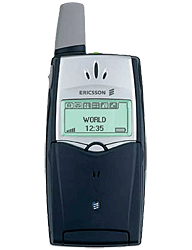
The Ericsson  T39m and R520m were the first phones which featured Bluetooth.
The name of this technology was taken from king Harald Blåtand which unified Danmark and
Norway in the 10th Century.
Bluetooth is a very flexible standard. As different applications have different needs theses were summarized in so called profiles which are fixed in the Bluetooth standard. Not all units support all profiles so one has to check the interoperability before buying them. For example headsets usually support only the Headset Profile. In the following table the existing profiles are summarized. Clicking the arrow at the beginning of each line shows details about the profile.
Bluetooth Profiles
| Profile | Short | Usage | Sample Products |
|---|---|---|---|
| Advanced Audio Distribution | A2DP | Audiotransfer | Audioplayer, Headphones, Micro |
| The Advanced Audio Distribution Profile supports the transmission of stereo audio data between two devices, e.g. between a pc and a headset. There are two different roles within this profile - one unit is the source (A2DP-SRC) and the other one the sink (A2DP-SNK). | |||
| Audio Video Remote Control | AVRCP | Audio/Video Remote Control | PC, VCR, DVD-Player |
| The Audio Video Remote Control Profile enables mobile Bluetooth devices to act as a remote control for audio- or video devices. Instead of a simple remote control unit the controler may also be a pc, mobile phone or pda. There are two different roles within this profile - one unit is the controler (AVRCP-CT) and the other one the target (AVRCP-TG). | |||
| Basic Imaging | BIP | Image transfer | Camera, PC, Scanner |
| The Basic Imaging Profile supports the transmission of graphics in the JPEG format. By using this profile e.g. cameras could transfer photos to a computer or printer. There ar six roles in this profile. If a camera uses the role BIP-ImagePush it can actively control the transfer of photos to another Bluetooth device. If the other Bluetooth device should control the transmission the role BIP-ImagePull has to be used. By using the role BIP-AutoArchive a camera can initiate the automatic archiving of pictures by another Bluetooth device. To control printing the role BIP-AdvImagePrint is used. To output pictures to a display the role BIP-RemMonitor is used. The role BIP-RemCam supports remote activation of a camera to take a picture from another Bluetooth device. | |||
| Basic Printing | BPP | Simple print jobs | PDA, Printer, Phone, PC |
| The Basic Printing Profile supports simple print jobs like printing of e-mails or sms from mobile phones. There are two roles in this profile. The device which initiates the print job has the role BPP-SenderDev and the one that prints the role BPP-Printer. | |||
| Common ISDN Access | CIP | ISDN over CAPI | ISDN Modem, PC |
| The Common ISDN Access Profile supports the usage of an ISDN connection which is processed by an ISDN-Access-Point. Bluetooth devices may use every ISDN feature supported by the access point. There are two roles in this profile. The device which acts as the access point is called ISDN-Gateway the one accessing the access point is called ISDN-Data Terminal. | |||
| Cordless Telephony | CTP | Cordless Telephony | Phones & base |
| The Cordless Telephony Profile suports wireless calls via Bluetooth. Like known from other wireless phones one device acts as base station while the other acts as the handset. The base station processes the calls, signals them and establishes and terminates the calls. The CTP profile supports the usage of basic features like connection management, CLIP, CLIR, tone dial, internal and external connections and three party conferences. CTP would also be usefull in mobile phones which could be used for calls in landline phone networks. There are two roles in this profile. The device which acts as the base station is called CT-Gateway while the one which acts as the handset is called CT-Terminal. | |||
| Device ID Profile | DIP | Infos about Bluetooth features of device | all Bluetooth devices |
| The Device ID Profile supports identification of Bluetooth devices beyond the limitations of the Device Class already available in Bluetooth. It enables identification of the manufacturer, product id, product version, and the version of the Device ID specification being met. | |||
| Dial-up Networking | DUN | Network connection to internet | Modem, PC, PDA, Phone, AP |
| The Dial-up Networking Profile supports Bluetooth devices to access the internet via a Bluetooth access point. A mobile phone or an ISDN or DSL access point may act as the access point and enable a notebook to access the internet. If the more powerfull CIP is availabe it should be used instead. There ar two roles in this profile. Devices which support the access to the internet are called DUN-Gateway. Devices which connect via the access point to the internet are called DUN-Data-Terminal. The Dial-up Networking Profile uses the Serial Port Profile. | |||
| Extended Service Discovery | ESDP | Extended Service Discovery | PDA, PC |
| The Extended Service Discovery Profile supports the extended discovery of other Bluetooth devices. It supports more functions than the Service Discovery Application Profile and is able to use other Bluetooth profiles like Personal Area Networking Profile to achieve this aim. | |||
| FAX | FAXP | Faxing | Modem, PC, Printer, FAX |
| The FAX Profile supports the transfer of faxes. One device connects to a network which supports the transfer of faxes and gives other Bluetooth devices access to this connection. There ar two roles in this profile. The device which is directly connected to the network is called FAXP-Gateway while the accessing device is called FAXP-Data. The Bluetooth FAX Profile uses the Serial Port Profile. | |||
| File Transfer | FTP | File Transfer | Phone, PDA, PC |
| The File Transfer Profile supports the exchange of files via TCP/IP between two computers connected to the internet. The file exchange is done between a FTP client and a FTP server. There are two roles in this profile. Devices giving access are called FT-Server while accessing devices are called FT-Client. The Bluetooth profile FTP uses the Generic Object Exchange Profile. | |||
| Generic Access | GAP | Access control | all Bluetooth devices |
| The Generic Access Profile supports different Bluetooth devices to "see" each other, to connect and to exchange information on which profiles they support. It is implemented in all Bluetooth devices. | |||
| Generic AV Distribution | GAVDP | Audio-/Video transfer | Audioplayer, PC, PDA |
| The Generic AV Distribution Profile supports the transfer of audio and video signals between devices. There are two roles in this profile. The device sending is called GAVDP-Initiator while the receiver is called GAVDP-Acceptor. To send commands regulating navigation and volume the receiver also needs to support the role GAVDP-Initiator. | |||
| Generic Object Exchange | GOEP | Object exchange | Phone, PDA, PC, Camera |
| The Generic Object Exchange Profile supports the exchange of objects like business cards or files. As the profile is usefull for a lot of purposes other profiles are based on this one, e.g. the File Transfer Profile, the Object Push Profile and the Synchronisation Profile. The Generic Object Exchange Profile itself also uses the Serial Port Profile. | |||
| Hands Free | HFP | In car telephony | Phone, Hands free kit |
| The Hands Free Profile supports the use of a car kit. It manages the communication between a car kit and a mobile phone via Bluetooth. There are two roles in this profile. The car kit is called HF-Unit while the mobile phone is called HF-Audio Gateway. | |||
| Hardcopy Cable Replacement | HCRP | Printing | Printer, Scanner, PC, FAX |
| The Hardcopy Cable Replacement Profile enables Bluetooth devices the output of documents to printers. The Bluetooth connection only substitutes the printer cable. Thus devices without support for printer cables are able to print documents. However with the profiles BIP and BPP there are two other profiles which are better for certain tasks of mobile devices. While the profile BPP is optimized for the output of simple dokuments BIP is optimized for the output of pictures. There are two roles in this profile. The printer is called HCRP-Server and the device that sends the print job HCRP-Client. | |||
| Health Device Profile | HDP | Data exchange between health appliances | ECG, pulse, fitness devices |
| The Health Device Profile supports the secure data exchange between medical devices like heart rate, pulse, temperature, etc. | |||
| HTTP Proxy Service | HPS | Internet access via gateway | Bluetooth Smart modules |
| The HTTP Proxy Service Profile enables Bluetooth Smart modules like sensors or actors to contact the internet via a gateway. | |||
| Headset | HSP | Headset voice output | Headset |
| The Headset Profile supports the usage of wireless headsets, e.g. sound input and output for a mobile phone or VoIP calls with a computer. The possible quality is only sufficient for speech. For music the A2DP profile is used. There are two roles in this profile. The headset is called Headset-Headset while the opposite unit is called Headset-Audio Gateway. The Headset Proile uses services of the Serial Port Profile (SPP). | |||
| Human Interface Design | HID | Inputs | Keyboard, Mouse, PC |
| The Human Interface Device Profile supports the wireless use of input devices like mice, keyboards or joysticks. There are two roles in this profile. Input devices are called HID-Client and receivers as HID-Unit. | |||
| Intercom | INTP | Two way communications | Intercom, Walkie-Talkies |
| The Intercom Profile enables two Bluetooth devices to act as radio devices (walkie-talkies) by connecting both devices directly by Bluetooth instead of the cellular network. | |||
| Internet Protocol Support | IPSP | Device discovery and package transport | Bluetooth Smart devices |
| The Internet Protocol Support Profile enables ip-ready devices to find each other and let them build up connections to transport IPv6 packages. | |||
| LAN Access * | LAP | Network connection via PPP | Access Point |
| The LAN Access Profile enables Bluetooth devices to access locale networks. Since Bluetooth specification 1.2 this profile is no longer included in the Bluetooth standard. Instead only the Personal Area Networking (PAN) Profile should be used. Only very few older devices support LAP. LAP is based on the Serial Port Profile (SPP). There are two roles. Devices which support the access to networks are called LAN-Access-Point. Devices which connect via a LAN-Access-Point to a network are called LAN-Data-Terminal. | |||
| Message Access | MAP | Message exchange between devices | Phone, Car Kit |
| The Message Access Profile supports exchange of messages between devices. Mostly used for automotive use where an on-board device (typically a hands free car kit) can exchange messages with another device (typically a mobile phone). | |||
| Medical Device | MDP | Data exchange between medical Appliances | EGG, Fitness |
| The Medical Device Profile supports secure data exchange between medical appliances. | |||
| Object Push | OPP | Address- & Date exchange | Phone, PDA, PC |
| TheObject Push Profile supports the exchange of address books and calendars. It uses the Generic Object Exchange Profile (GOEP). There are two different roles. The device sending data is called OPP-Client while the receiver is called OPP-Server. | |||
| Personal Area Networking | PAN | Network connection | Access Point |
| The Personal Area Networking Profile supports networks in personal areas. Through these ad-hoc networks up to eight devices can exchange data. Devices like harddisks, internet access or printers may be used like in local networks (lan). There are two different roles. A PAN-Access Point can provide a network access to other Bluetooth devices which are called PAN users or act as a master in a PAN group. This network can consist of up to seven PAN users via a PAN-AP. Two PAN users may otherwise connect directly with each other without a PAN-AP. | |||
| Phonebook Access | PBAP | read phonebook | Phone, Car Kits |
| The Phonebook Access Profile supports read access to a mobile phone's phonebook for other devices. | |||
| Serial Port | SPP | Serial data exchange | Modem, PDA, PC, Phone |
| The Serial Port Profile supports serieal connections between two Bluetooth devices. The SPP-Profil may be used for data exchange between computers and mobile phones. The Dial-up Networking Profile (DUN), the Fax Profile (FAXP) and the Headset Profile are based on SPP. There are two different roles. The device requesting a serial connection is called SerialDev-A while the other device is called SerialDev-B. | |||
| Service Discovery Application | SDAP | Discovery of units | all Bluetooth units |
| The Service Discovery Application Profile supports the discovery of other Bluetooth devices in range. It uses the Bluetooth profile GAP and identifies the supported services by using the Service Discovery Protocol (SDP). Requesting devices are called SDAP-Client while answering devices are called SDAP-Server. Most devices support both roles. Devices which do not request connections on their own do only work as SDAP-Server. | |||
| SIM Access | SAP | Read SIM cards | Phone, Car Kits |
| The SIM Access Profile supports the access to SIM cards of mobile phones enabling car kits to use their own sender/receiver unit with external antenna. The unit accessing the SIM card is called SIM Access Client. The unit with the card reader is called SIM Access Server. | |||
| Synchronisation | SP | Synchronisation | Phone, PDA, PC |
| The Synchronisation Profile supports the synchronisation of data. It also needs the Generic Object Exchange Profile (GOEP). There are two different roles. The controling device is called Sync-Client while the controlled device is called Sync-Server. | |||
| Synchronous Connection-Oriented link | SCO | Access to headset | Phone, Headset |
| The Synchronous Connection-Oriented Link Profile supports access to microphone and speaker of headsets. | |||
* Profile no longer included since Bluetooth 1.2
Versions
The Standard was developed as follows:
- Bluetooth 1.0
- Maximum data transfer rate of 723.2 kbit/s
- Maximum data transfer rate of 723.2 kbit/s
- Bluetooth 1.1
- Maximum data transfer rate of 723.2 kbit/s
- RSSI added
- Corrected security issues caused by Bluetooth Hardware Device Address Transmission
- Bluetooth 1.2
- Maximum data transfer rate of 723.2 kbit/s
- Less sensitive against disturbances by implementation of AFH
- Bluetooth 2.0
- Maximum data transfer rate of 2.1 Mbit/s with EDR
- Maximum data transfer rate of 2.1 Mbit/s with EDR
- Bluetooth 2.1
- Secure Simple Pairing improves ease of pairing of Bluetooth devices while implementing strong security
- Encryption Pause and Resume increases security in the link by ensuring that no user data is transmitted without encryption and enables periodic update of the keys
- Extended Inquiry Response provides better filtering of devices before connection
- Sniff Subrating reduces power consumption when devices are in the sniff, low-power mode, increasing battery-life
- Bluetooth 3.0
- Maximum data transfer rate of 24 Mbit/s by using wlan based IEEE 802.11 PAL
- Increased power savings due to enhanced power control
- Bluetooth 4.0
- Reduced power consum
- Dual-Mode-Implementation for parallel usage of power savings techniques with classic techniques
- Single-Mode-Implementation for very compact devices with extremly low power consumtion at 1 MBit/s and 100m range
- Bluetooth 4.1
- Communication with LTE units to avoid disturbances in nearby frequency bands
- Faster data connections in Bluetooth Smart mode by using L2CAP - Connection Oriented Channels
- IPv6-based communication (optional)
- Rapid-Synchronisation provides Bluetooth broadcasting, e.g. between tv and 3d glasses
- Bluetooth 4.2
- Optimizations in Bluetooth Low Energy (LE) mode
- Reduced power consumtion
- Data packages of up to 251 instead of only 27 bytes allowed
- Secure pairing through key length of 256 bit and AES-CMAC authentification
- IPSP integration enables ip-ready devices to find each other and let them build up connections to transport IPv6 packages
- HPS usage by Bluetooth-Smart-Modules like sensors and actors to access the internet via a gateway
- Optimizations in Bluetooth Low Energy (LE) mode
- Bluetooth 5.0
- Maximum range of Low-Energy-Bluetooth increased from 50 to 200 meters
- Doubled speed
- Higher transfer capacity by increasing broadcast packages from von 31 to 279 bytes
- Lower power consumtion by enhanced broadcasting
- Bluetooth 5.1
- Direction Finding supports determination of the direction a Bluetooth signal is coming from
- GATT caching enhancements support faster and less energy consuming BLE connections
- Bluetooth 5.2
- Isochronous Channels (ISOC)
- LE Power Control (LEPC)
- Better control over the quality of the signal
- Reducing error rates at the receiving end
- Improving coexistence with other signals in the 2.4 GHz band besides Bluetooth like Wi-Fi or Zigbee
- Enhanced Attribute Protocol (EATT)
- Bluetooth 5.3
- Connection Update Enhancements
- Encryption Key Size Control Enhancements
- Periodic Advertising Enhancement
- Channel Classification Enhancements
- Bluetooth 5.4
- Bi-directional communication with thousands of end nodes from a single access point, e.g. for Electronic Shelf Label (ESL) market
- Periodic Advertising with Responses (PAwR) allows time-synchronized star network with bi-directional communication
- Encrypted Advertising Data (EAD) adds ability to encrypt advertising data
 Official Bluetooth Site
 Back to main page